
What Is KLOW? The Four-Peptide Blend Explained (Australia)

| Components | BPC-157, TB-500, GHK-Cu and KPV |
|---|---|
| Vial size | 80mg total across the four peptides |
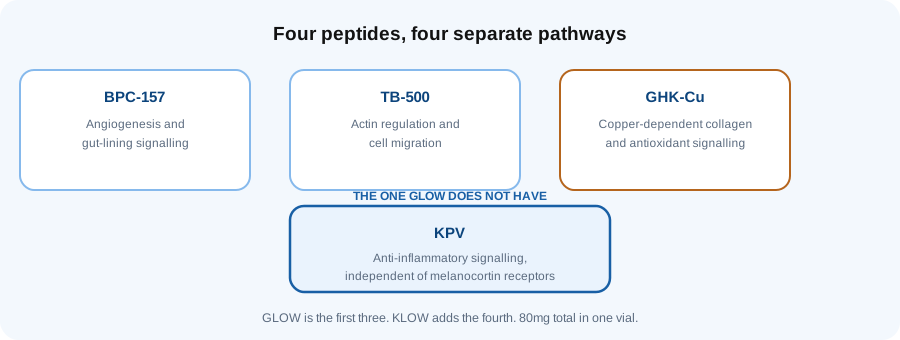
| BPC-157 contributes | Angiogenesis and gut-lining signalling |
| TB-500 contributes | Actin regulation and cell migration |
| GHK-Cu contributes | Copper-dependent collagen and antioxidant signalling |
| KPV contributes | Anti-inflammatory signalling, receptor independent |
| Compared with | GLOW (3 peptides, 70mg), BPC-157 + TB-500 (2 peptides) |
| Purity | 99% or higher, independently HPLC tested per batch |
KLOW vs GLOW
| KLOW | GLOW | |
|---|---|---|
| Components | BPC-157, TB-500, GHK-Cu, KPV | BPC-157, TB-500, GHK-Cu |
| Mechanism count | 4 distinct pathways | 3 distinct pathways |
| Anti-inflammatory component | KPV included | Not included |
| Best suited for | Vascular + structural + matrix + inflammation research | Vascular + structural + matrix research |
KLOW is a four-peptide blend: BPC-157, TB-500, GHK-Cu and KPV in a single 80mg vial. It is GLOW with KPV added, which means four separate research pathways rather than three, from one preparation.
This guide covers what is in KLOW, what each component is studied for, how it compares with GLOW and the two-peptide blend, reconstitution volumes for an 80mg vial, and how to check a batch. KLOW is supplied by PhaseOne strictly for laboratory research.
On this page
What is KLOW | What each peptide does | KLOW vs GLOW | What it is studied for | Dosage and reconstitution | Checking purity | FAQs
Key points at a glance
- Four peptides in one 80mg vial: BPC-157, TB-500, GHK-Cu and KPV
- Also searched as klow peptide, klow blend, klow stack and klow peptide australia
- Each component works through a different mechanism, so they add to each other rather than overlap
- KLOW is GLOW plus KPV. GLOW is the same first three peptides in a 70mg vial
- Combination-specific research is limited compared with the literature on each peptide alone
- Supplied as a lyophilised powder for laboratory research only
What is KLOW?
KLOW is a pre-mixed blend of four research peptides in fixed proportions. The name is informal, coined from the components rather than from any research literature, and you will see it written klow peptide, klow blend and klow stack.
The reason blends exist is practical. Reconstituting four separate vials and combining them by hand introduces measurement error at every step, and the error compounds with each component. A single pre-mixed vial keeps the ratio consistent across repeat preparations, which matters when a study runs multiple replicates.
What each peptide contributes
The four are not variations on a theme. They act through mechanisms that have little to do with each other, which is the whole argument for combining them.
| Peptide | Mechanism studied | Guide |
|---|---|---|
| BPC-157 | Angiogenesis and gut-lining signalling | BPC-157 guide |
| TB-500 | Actin regulation and cell migration | TB-500 guide |
| GHK-Cu | Copper-dependent collagen and antioxidant signalling | GHK-Cu guide |
| KPV | Anti-inflammatory signalling, receptor independent | In this page |
Why KPV is the one that makes it KLOW
KPV is a three amino acid fragment, lysine-proline-valine, taken from the tail of alpha-melanocyte-stimulating hormone. Its research interest is anti-inflammatory signalling, and the notable part is that this activity persists in melanocortin receptor knockout models. In other words it does not work through the receptor pathway its parent hormone is known for.
That independence is why KPV adds a genuine fourth dimension rather than doubling up on something already in the blend. Inflammation is mechanistically separate from angiogenesis, cytoskeletal regulation and copper-dependent remodelling, and it can influence how the other three read out, which is the argument for studying them together. See the KPV guide or the KPV product page .
KLOW vs GLOW
KLOW is GLOW with KPV added, and the choice comes down to one question: does the research design involve inflammatory markers?
| GLOW | KLOW | |
|---|---|---|
| Peptides | BPC-157, TB-500, GHK-Cu | BPC-157, TB-500, GHK-Cu, KPV |
| Vial size | 70mg | 80mg |
| Pathways | 3 | 4 |
| Anti-inflammatory component | No | Yes, KPV |
| Protocol complexity | Moderate | Highest of the blends |
If inflammation is not part of the design, GLOW covers the same ground with one less variable to track. If it is, KLOW saves running a separate KPV arm. Compare GLOW and KLOW , or read the GLOW guide .
KLOW vs the BPC-157 and TB-500 blend
The two-peptide blend is the simplest option: angiogenesis and cell migration, nothing else. KLOW adds copper-dependent remodelling and inflammation on top. More pathways means more to measure, so the simpler blend is often the better starting point. See the BPC-157 and TB-500 blend guide or the blend product page .
What KLOW is studied for
Searches for klow peptide benefits are really asking what the four components are studied for, so it is worth separating research areas from claimed outcomes. Each component has its own pre-clinical literature: BPC-157 and TB-500 in animal-model regenerative research, GHK-Cu in fibroblast culture and wound research, KPV in animal-model inflammatory bowel and dermal inflammation research.
What does not exist in any volume is research on the four together. Combination-specific work lags a long way behind the individual literature, so anything presented as a known benefit of KLOW specifically is an extrapolation from four separate research bases rather than a finding. That is a real limitation, not a disclaimer.
Designing a protocol around four mechanisms
A KLOW study has four sets of markers to track: angiogenesis, cell migration and cytoskeletal, collagen and antioxidant gene expression, and inflammatory. They also run on different timescales, so sampling points that suit one may miss another. Most researchers arrive at KLOW after working with the individual compounds or GLOW, rather than starting here.
KLOW dosage and reconstitution
Klow dosage questions are reconstitution questions. The vial holds 80mg across four peptides, so the volume of bacteriostatic water you add sets the concentration of the whole preparation, and each component sits at its own share of that total.
| Vial | Bac water added | Total concentration | Volume per 1mg total |
|---|---|---|---|
| 80mg | 3ml | 26.7mg per ml | 0.04ml, 4 units |
| 80mg | 5ml | 16mg per ml | 0.06ml, 6 units |
| 80mg | 8ml | 10mg per ml | 0.1ml, 10 units |
Use the peptide dosage calculator to work each peptide out separately, and the reconstitution guide for technique. You will need bacteriostatic water and 1ml syringes, both in the Starter Kit .
Refrigerate once reconstituted and keep it out of light, which matters more here than for most blends because of the copper peptide component. The storage guide has the detail.
Common misconceptions
The first is that four peptides amplify one effect. They do not: each acts on a separate pathway, so the rationale is coverage rather than intensity. The second is that KLOW is a stronger GLOW, when KPV is a different mechanism rather than more of the same. The third is assuming KPV works through melanocortin receptors because Melanotan II shares the same parent hormone. It does not, and that is precisely why it earns its place in the blend.
Checking purity before you order
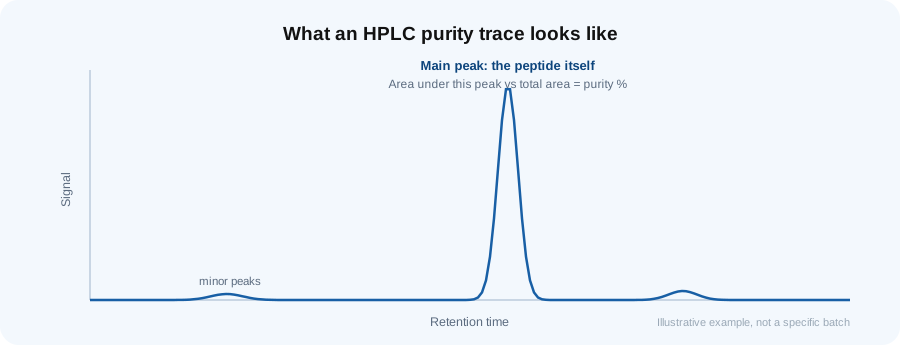
A blend needs more from a certificate than a single peptide does: the identity and purity of all four components, not a single combined figure. Every PhaseOne KLOW batch is independently HPLC tested at 99% or higher across its components, and the Certificate of Analysis for that batch is published in our public COA library so it can be read before ordering.
See the HPLC testing guide for how to read one, and the research standards guide for what to expect from any supplier of blends.
Buying KLOW in Australia
PhaseOne supplies the KLOW blend in 80mg vials, dispatched from Sydney with tracking, usually arriving in 1 to 5 business days. View KLOW pricing , compare with GLOW , or browse the full research peptide range .
Related research guides
For each component, see the BPC-157 guide , TB-500 guide , GHK-Cu guide and KPV guide . For the simpler blends, see GLOW and the BPC-157 and TB-500 blend . For the category, see the regenerative peptide guide .
Frequently Asked Questions
What is KLOW?
KLOW is a four-peptide blend of BPC-157, TB-500, GHK-Cu and KPV in a single 80mg vial, supplied as a lyophilised powder for laboratory research.
What peptides are in the KLOW blend?
BPC-157, TB-500, GHK-Cu and KPV. The first three are the same peptides as GLOW; KPV is the fourth that makes it KLOW.
What is KLOW studied for?
Each component has its own research area: angiogenesis and gut-lining signalling, actin regulation and cell migration, copper-dependent collagen and antioxidant signalling, and anti-inflammatory signalling. Research on the four in combination is limited compared with the literature on each alone.
What are the benefits of the KLOW peptide blend?
The honest answer is that combination-specific research is thin. What exists is four individual pre-clinical literatures covering separate pathways. Anything described as a benefit of KLOW as a whole is an extrapolation across those four rather than a documented finding.
How does KLOW differ from GLOW?
KLOW is GLOW plus KPV. GLOW holds BPC-157, TB-500 and GHK-Cu in a 70mg vial; KLOW adds KPV for an anti-inflammatory pathway in an 80mg vial.
Is KLOW just a stronger version of GLOW?
No. KPV brings a different mechanism, not more of the other three. If a design does not involve inflammatory markers, GLOW covers the same ground with one less variable.
What is klow dosage in research?
It is a reconstitution question rather than a protocol. An 80mg vial with 5ml of bacteriostatic water gives 16mg per ml in total, and the blends tab of the dosage calculator splits that across the four components.
How much bacteriostatic water do I add to KLOW?
Commonly 3ml to 8ml depending on the concentration you want. More water gives a larger, easier to read draw for the same amount of peptide.
Why was KPV chosen as the fourth peptide?
Because its anti-inflammatory activity works independently of melanocortin receptors, which makes it mechanistically distinct from the other three rather than overlapping with them.
Does KPV work like Melanotan II?
No. Both derive from alpha-MSH, but Melanotan II acts on melanocortin receptors and KPV's activity persists without them, which is its defining research characteristic.
Is there research on the four-peptide combination itself?
Very little. The bulk of the literature studies BPC-157, TB-500, GHK-Cu and KPV individually. Combination work is exploratory rather than confirmatory.
Should I start with KLOW or GLOW?
Most researchers start with the individual compounds or GLOW and move to KLOW once the design specifically needs the inflammation dimension, since four pathways means four sets of markers to track.
How should KLOW be stored and reconstituted?
Refrigerated and out of light, reconstituted with bacteriostatic water added down the vial wall and swirled rather than shaken. The copper peptide component makes light protection more important than usual.
How is KLOW purity verified?
Every batch is independently HPLC tested and the Certificate of Analysis, covering all four components rather than a single combined figure, is published in our public COA library.
Where can I buy KLOW in Australia?
PhaseOne ships 80mg vials Australia-wide from Sydney with tracking, with batch results published in the COA library.
Disclaimer
All products supplied by PhaseOne are intended strictly for laboratory research purposes only. Products are not intended for human consumption, therapeutic use, cosmetic use, veterinary use, or diagnostic applications.


