
What Is GLOW? The Three-Peptide Blend Explained (Australia)

| Components | BPC-157, TB-500 and GHK-Cu |
|---|---|
| Vial size | 70mg total across the three peptides |
| BPC-157 contributes | Angiogenesis and gut-lining signalling |
| TB-500 contributes | Actin regulation and cell migration |
| GHK-Cu contributes | Copper-dependent collagen and antioxidant signalling |
| Compared with | KLOW (4 peptides, 80mg), BPC-157 + TB-500 (2 peptides) |
| Purity | 99% or higher, independently HPLC tested per batch |
GLOW vs KLOW
| GLOW | KLOW | |
|---|---|---|
| Components | BPC-157, TB-500, GHK-Cu | BPC-157, TB-500, GHK-Cu, KPV |
| Vial size | 70mg | 80mg |
| Pathways | 3 | 4 |
| Anti-inflammatory component | Not included | KPV included |
| Protocol complexity | Moderate | Highest of the blends |
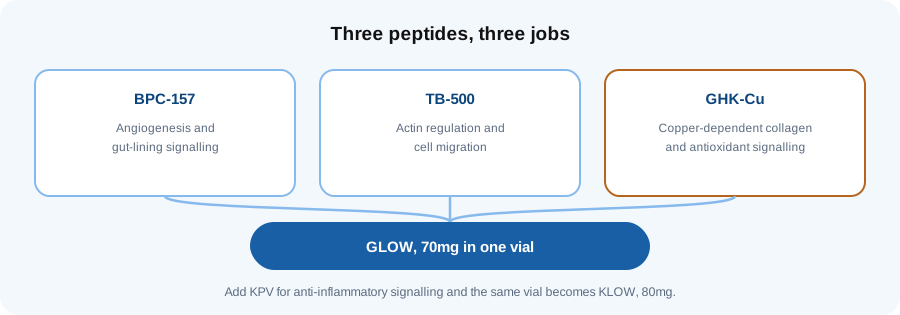
GLOW is a three-peptide blend: BPC-157, TB-500 and GHK-Cu in a single 70mg vial. Three peptides, three unrelated mechanisms, one preparation. Add KPV and the same vial becomes KLOW .
This guide covers what is in GLOW, what each component contributes, how it compares with KLOW and the two-peptide blend, reconstitution volumes for a 70mg vial, and how to check a batch. GLOW is supplied by PhaseOne strictly for laboratory research.
On this page
What is GLOW | What each peptide does | Comparing the blends | Dosage and reconstitution | What it is studied for | Checking purity | FAQs
Key points at a glance
- Three peptides in one 70mg vial: BPC-157, TB-500 and GHK-Cu
- Also searched as glow peptide, glow blend, glow stack and glowing peptides
- Each component acts through a different mechanism, so they complement rather than overlap
- KLOW is the same three plus KPV in an 80mg vial
- Combination-specific research is limited next to the literature on each peptide alone
- Supplied as a lyophilised powder for laboratory research only
What is GLOW?
GLOW is a pre-mixed blend of three research peptides at fixed proportions in one vial. The name is informal, taken from the components rather than any research literature, and you will see it written glow peptide, glow blend and glow stack.
The case for a blend is practical rather than scientific. Reconstituting three vials separately and combining them by hand introduces measurement error at each step, and that error compounds. One pre-mixed vial holds the ratio steady across repeat preparations, which matters when a study runs replicates.
What each peptide contributes
The three do genuinely different things, which is the argument for putting them together.
| Peptide | Mechanism studied | Read more |
|---|---|---|
| BPC-157 | Angiogenesis and gut-lining signalling | BPC-157 guide |
| TB-500 | Actin regulation and cell migration | TB-500 guide |
| GHK-Cu | Copper-dependent collagen and antioxidant signalling | GHK-Cu guide |
Full profiles: BPC-157 , TB-500 and GHK-Cu . The individual vials are also sold separately: BPC-157 , TB-500 and GHK-Cu .
GLOW vs KLOW vs the two-peptide blend
PhaseOne runs three blends, and they step up in complexity rather than strength.
| BPC-157 + TB-500 | GLOW | KLOW | |
|---|---|---|---|
| Peptides | 2 | 3 | 4 |
| Components | BPC-157, TB-500 | BPC-157, TB-500, GHK-Cu | BPC-157, TB-500, GHK-Cu, KPV |
| Vial size | 10mg or 20mg | 70mg | 80mg |
| Adds | Baseline pairing | Copper-dependent remodelling | Anti-inflammatory signalling |
| Protocol complexity | Lowest | Moderate | Highest |
More components means more markers to track, not a stronger effect. If a design does not involve copper-dependent pathways, the two-peptide blend is the cleaner starting point. If it involves inflammation as well, KLOW saves running a separate KPV arm.
GLOW dosage and reconstitution
Glow peptide dosage questions are reconstitution questions. The vial holds 70mg across three peptides, so the water you add sets the concentration of the whole preparation and each component sits at its own share of that total.
| Vial | Bac water added | Total concentration | Volume per 1mg total |
|---|---|---|---|
| 70mg | 3ml | 23.3mg per ml | 0.043ml, 4.3 units |
| 70mg | 5ml | 14mg per ml | 0.07ml, 7 units |
| 70mg | 7ml | 10mg per ml | 0.1ml, 10 units |
Use the peptide dosage calculator to work each peptide out separately, and the reconstitution guide for technique. You will need bacteriostatic water and 1ml syringes, both in the Starter Kit .
Refrigerate once reconstituted and keep it out of light. The copper peptide component makes light protection matter more than it would for a plain peptide blend. See the storage guide .
What GLOW is studied for
Each component carries its own pre-clinical literature: BPC-157 and TB-500 in animal-model regenerative research, GHK-Cu in fibroblast culture and wound research. Those are three separate research bases, and they are the honest answer to what GLOW is studied for.
Research on the three in combination is thin. Anything described as an established benefit of GLOW as a blend is an extrapolation across those literatures rather than a finding about the blend itself. Worth knowing before designing around it.
Designing a protocol around three mechanisms
A GLOW study tracks three sets of markers: angiogenesis, cell migration and cytoskeletal, and collagen and antioxidant gene expression. They run on different timescales, so a sampling schedule that suits one can miss another. Most researchers come to GLOW after working with the individual compounds rather than starting here.
Common misconceptions
The first is that three peptides amplify one effect. They do not: the point is covering three pathways, not intensifying one. The second is that GLOW is a stronger version of the two-peptide blend, when GHK-Cu adds a different mechanism rather than more of the same. The third is assuming blend research transfers from the individual compound literature, which is exactly the inference the evidence does not support.
Checking purity before you order
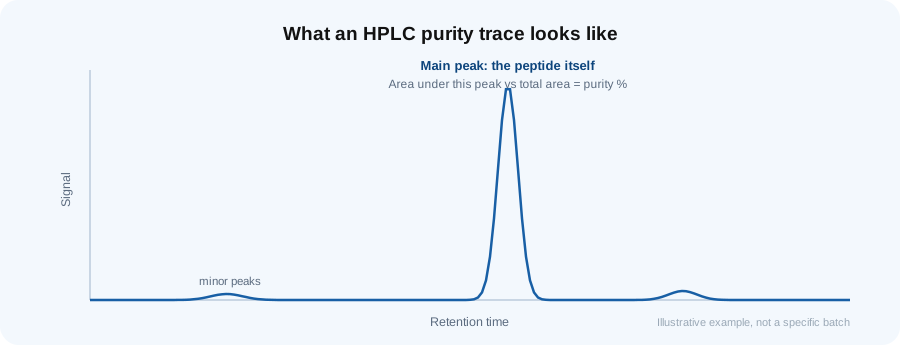
A blend certificate has to cover each component rather than give one combined figure. Every PhaseOne GLOW batch is independently HPLC tested at 99% or higher across its components, and the Certificate of Analysis for that batch is published in our public COA library so it can be read before ordering.
See the HPLC testing guide for how to read one, and the research standards guide for what to expect from a supplier of blends.
Buying GLOW in Australia
PhaseOne supplies GLOW in 70mg vials, dispatched from Sydney with tracking, usually arriving in 1 to 5 business days. View GLOW pricing , compare with KLOW and the BPC-157 and TB-500 blend , or browse the full research peptide range .
Related research guides
For each component, see the BPC-157 guide , TB-500 guide and GHK-Cu guide . For the four-peptide version, see KLOW . For the two-peptide option, see the BPC-157 and TB-500 blend guide . For the category, see the regenerative peptide guide .
Frequently Asked Questions
What is GLOW?
GLOW is a three-peptide blend of BPC-157, TB-500 and GHK-Cu in a single 70mg vial, supplied as a lyophilised powder for laboratory research.
What peptides are in the GLOW blend?
BPC-157, TB-500 and GHK-Cu. KLOW is the same three plus KPV.
What is GLOW studied for?
Its components are: angiogenesis and gut-lining signalling, actin regulation and cell migration, and copper-dependent collagen and antioxidant signalling. Research on the three in combination is limited compared with the literature on each alone.
What is glow peptide dosage in research?
A reconstitution question rather than a protocol. A 70mg vial with 5ml of bacteriostatic water gives 14mg per ml in total, and the blends tab of the dosage calculator splits that across the three components.
How does GLOW differ from KLOW?
KLOW is GLOW plus KPV, which adds an anti-inflammatory pathway. GLOW is 70mg across three peptides; KLOW is 80mg across four.
How does GLOW differ from the BPC-157 and TB-500 blend?
GLOW adds GHK-Cu, bringing copper-dependent collagen and antioxidant signalling to the angiogenesis and cell migration pairing.
Is GLOW stronger than the two-peptide blend?
No. It covers an additional pathway rather than intensifying the existing two.
How much bacteriostatic water do I add to GLOW?
Commonly 3ml to 7ml depending on the concentration you want. More water gives a larger, easier to read draw for the same amount of peptide.
How should GLOW be stored and reconstituted?
Refrigerated and out of light, reconstituted with bacteriostatic water added down the vial wall and swirled rather than shaken. The GHK-Cu component makes light protection more important than usual.
Is there research on the three-peptide combination itself?
Very little. The literature studies BPC-157, TB-500 and GHK-Cu individually, and combination work is exploratory rather than confirmatory.
Should I start with GLOW or the individual peptides?
Most researchers start with the individual compounds, since three pathways means three sets of markers to track and a more complex protocol.
Why use a pre-mixed blend instead of combining vials?
Combining three reconstituted peptides by hand introduces measurement error at every step. A pre-mixed vial holds the ratio steady across repeat preparations.
How is GLOW purity verified?
Every batch is independently HPLC tested and the Certificate of Analysis, covering each component rather than one combined figure, is published in our public COA library.
Where can I buy GLOW in Australia?
PhaseOne ships 70mg vials Australia-wide from Sydney with tracking, with batch results published in the COA library.
Disclaimer
All products supplied by PhaseOne are intended strictly for laboratory research purposes only. Products are not intended for human consumption, therapeutic use, cosmetic use, veterinary use, or diagnostic applications.


