
What Is GHK-Cu? Copper Peptide Research Guide Australia

| Also known as | GHK Cu, GHKCu, copper GHK, copper tripeptide-1 |
|---|---|
| Structure | Glycyl-L-histidyl-L-lysine bound to a copper ion |
| Class | Copper-binding tripeptide |
| Studied for | Collagen and elastin signalling, antioxidant enzymes, gene expression |
| Found in blends | GLOW (3 peptides), KLOW (4 peptides) |
| Vial sizes supplied | 50mg and 100mg lyophilised powder |
| Research maturity | Large in-vitro and animal-model base; limited human clinical data |
| Purity | 99% or higher, independently HPLC tested per batch |
GHK-Cu vs BPC-157
| GHK-Cu | BPC-157 | |
|---|---|---|
| Mechanism class | Copper-dependent tissue remodelling | Angiogenesis (VEGF), gut signalling |
| Sequence length | 3 amino acids + copper ion | 15 amino acids |
| Key research focus | Collagen/elastin, antioxidant enzymes | Blood vessel formation, gastric protection |
| Found in blends | GLOW, KLOW | GLOW, KLOW, BPC-157+TB-500 blend |
| Research base | Extensive in-vitro/dermal | Extensive pre-clinical/animal-model |
GHK-Cu is a copper peptide: the tripeptide glycyl-L-histidyl-L-lysine bound to a copper ion. It occurs naturally in human plasma, and what it does in research is act as a copper carrier and signalling molecule in tissue remodelling, collagen and elastin signalling, and antioxidant enzyme activity.
This guide covers what GHK-Cu is, what the copper actually contributes, what the research does and does not show, how it sits inside the GLOW and KLOW blends, reconstitution volumes for the 50mg and 100mg vials, and how to check a batch before ordering. GHK-Cu is supplied by PhaseOne strictly for laboratory research.
On this page
What is GHK-Cu | GHK vs GHK-Cu | What it does | In GLOW and KLOW | Reconstitution | Powder vs serums | Checking purity | FAQs
Key points at a glance
- GHK-Cu is the tripeptide GHK (glycine, histidine, lysine) bound to a copper ion
- Also written GHK Cu, GHKCu, copper GHK, GHK copper peptide and copper tripeptide-1
- Occurs naturally in human plasma, where concentration declines with age
- Studied for collagen and elastin signalling, antioxidant enzyme activity and gene expression
- One of the three peptides in GLOW and four in KLOW
- Supplied as a lyophilised powder in 50mg and 100mg vials, not as a cosmetic serum
What is GHK-Cu?
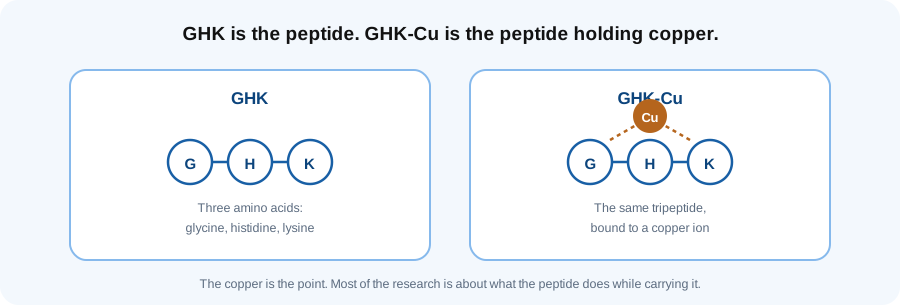
GHK-Cu is a copper complex of a very short peptide. The peptide part, GHK, is three amino acids: glycine, histidine and lysine. On its own it is a small fragment with limited activity. Bound to a copper ion it becomes GHK-Cu, and that complex is what the research literature is about.
It was first identified by Loren Pickart in the mid-1970s, who noticed that plasma from younger people drove more protein synthesis in liver cell cultures than plasma from older people, and traced the difference to this copper-bound tripeptide. That observation set up the idea that has driven the field since: GHK-Cu as a copper-delivery signal involved in repair and remodelling.
Since then it has built one of the larger research literatures of any single peptide, spanning gene expression microarray work, fibroblast and keratinocyte culture studies, and animal-model wound and liver regeneration research.
GHK vs GHK-Cu: what the copper adds
This is the distinction most listings blur. GHK is the peptide. GHK-Cu is the peptide holding a copper ion, and copper is not a passive passenger: the research interest is specifically in copper-dependent processes, including the activity of antioxidant enzymes that require copper as a cofactor.
A product sold as GHK without the Cu is a different material with a different research profile. When comparing suppliers, the useful question is whether the certificate confirms the copper complex, not just the amino acid sequence.
What does GHK-Cu do?
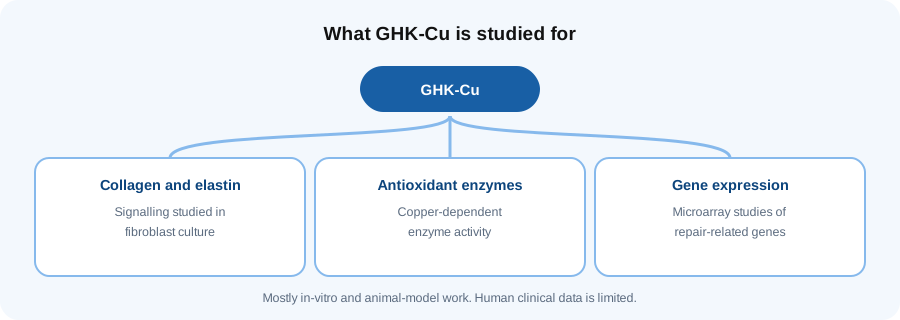
In research terms it is studied along three main threads, all of which come back to the same copper-binding mechanism.
Collagen and elastin signalling
The most studied thread. Fibroblast culture work examines GHK-Cu's effect on collagen and elastin production signalling, which is the basis of its reputation in skin research and the reason it appears in cosmetic formulations.
Copper-dependent antioxidant enzyme activity
Several antioxidant enzymes need copper as a cofactor. GHK-Cu is studied as a delivery route for that copper, which links it to oxidative stress research rather than to structural proteins alone.
Gene expression
Microarray studies have reported GHK-Cu influencing the expression of a broad set of genes associated with tissue repair and remodelling. This is the widest and least specific of the three threads, and the one most often overstated in summaries.
Why plasma GHK declines with age
Observational research has reported plasma GHK concentration falling substantially between early adulthood and later life. That decline is the origin of most interest in the compound, since it lines up loosely with reduced repair capacity and skin elasticity in ageing research models.
It is a correlation. It does not establish that restoring GHK-Cu reverses those changes, and research summaries that present it as if it does are running ahead of the evidence.
Hair and dermal research
A specific sub-area looks at GHK-Cu in hair follicle cell culture, with some studies reporting effects on dermal papilla cell proliferation markers. It sits alongside the wound healing and collagen work as another application of the same core mechanism rather than a separate one.
GHK-Cu in the GLOW and KLOW blends
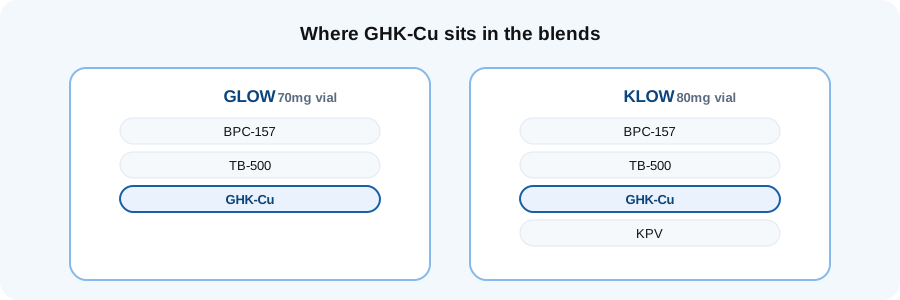
GHK-Cu is a component of both of PhaseOne's multi-peptide blends. GLOW combines it with BPC-157 and TB-500, pairing copper-dependent remodelling with angiogenesis and actin regulation. KLOW adds KPV as a fourth component for anti-inflammatory signalling.
If the research question is specifically about copper-dependent pathways, the single compound is the cleaner choice. The blends suit work looking at several mechanisms together. See the GLOW guide and KLOW guide .
Reconstitution volumes for GHK-Cu
GHK-Cu comes in larger vials than most peptides, 50mg and 100mg, so the volumes differ from the usual 10mg ones. The table gives common starting points.
| Vial | Bac water added | Concentration | Volume per 1mg |
|---|---|---|---|
| 50mg | 3ml | 16.7mg per ml | 0.06ml, 6 units |
| 50mg | 5ml | 10mg per ml | 0.1ml, 10 units |
| 100mg | 5ml | 20mg per ml | 0.05ml, 5 units |
| 100mg | 10ml | 10mg per ml | 0.1ml, 10 units |
Use the peptide dosage calculator for other combinations and the reconstitution guide for technique. You will need bacteriostatic water and 1ml syringes, both in the Starter Kit .
Handling: the copper complex is the fragile part
GHK-Cu's research relevance depends on the copper staying coordinated inside the peptide. Extreme pH, long light exposure and contact with competing chelating agents can disturb that complex, which makes handling a sharper issue here than for peptides with no metal to lose. Keep it refrigerated and out of light, and reconstitute with bacteriostatic water rather than improvising a diluent. The storage guide covers the rest.
It also means batch testing that confirms the complex, not just the sequence, is worth more for this compound than for most.
Research-grade powder vs cosmetic copper peptide serums
GHK-Cu turns up in two very different places. Cosmetic copper peptide serums and creams are finished consumer products, formulated at low concentrations with cosmetic excipients for topical use. What PhaseOne supplies is unformulated lyophilised GHK-Cu in a vial, for laboratory research only.
They are not interchangeable, and findings do not transfer cleanly between them, because formulation, concentration and delivery all affect the result independently of the peptide. Searches for ghk cu serum, ghkcu serum or topical ghk cu are looking for the cosmetic category, which is not what this is.
What the research does not establish
Most of the literature is in-vitro and animal-model work. Human clinical data is limited relative to the volume of cell culture research, and the gene expression findings in particular are often quoted far beyond what the studies claim. The age-decline correlation is not evidence of reversal. Treat summaries that promise outcomes as marketing rather than findings.
Naming and nomenclature
You will see GHK-Cu written GHK Cu, GHKCu, copper GHK, GHK copper peptide, copper peptide GHK-Cu and copper peptides GHK cu, plus GHK-Cu peptides and peptides GHK. In cosmetic ingredient lists it appears as copper tripeptide-1. When someone writes plain GHK they may mean the unbound tripeptide, which is a different material.
Checking purity before you order
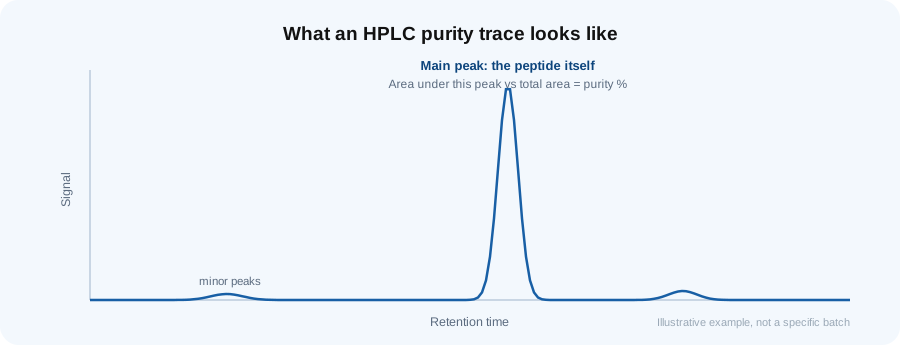
Every PhaseOne GHK-Cu batch is independently HPLC tested at 99% or higher, and the Certificate of Analysis for that batch is published in our public COA library so you can read the result before ordering rather than after the vial arrives. For what a certificate shows and how to read one, see the HPLC testing guide and the research standards guide .
Buying GHK-Cu in Australia
PhaseOne supplies GHK-Cu copper peptide in 50mg and 100mg vials, dispatched from Sydney with tracking, usually arriving in 1 to 5 business days. The 100mg vial brings the cost per milligram down for longer work. View GHK-Cu pricing and vial sizes , or compare the blends: GLOW and KLOW .
Related research guides
For the blends containing it, see the GLOW guide and KLOW guide . For the wider category, see the cosmetic peptide guide . For the other regenerative compounds studied alongside it, see BPC-157 and TB-500 . For handling, see the reconstitution guide .
Frequently Asked Questions
What is GHK-Cu?
GHK-Cu is a copper peptide: the tripeptide glycyl-L-histidyl-L-lysine bound to a copper ion. It occurs naturally in human plasma and is studied for tissue remodelling, collagen and elastin signalling, and copper-dependent antioxidant enzyme activity.
What does GHK-Cu do?
In research it acts as a copper carrier and signalling molecule. The three studied threads are collagen and elastin signalling in fibroblast culture, copper-dependent antioxidant enzyme activity, and effects on the expression of repair-related genes.
What is GHK cu short for?
Glycyl-L-histidyl-L-lysine, the three amino acid sequence, plus Cu for copper. In cosmetic ingredient lists the same compound is called copper tripeptide-1.
Is GHK the same as GHK-Cu?
No. GHK is the tripeptide on its own. GHK-Cu is that peptide bound to copper, and most of the research interest is specifically in the copper-dependent activity, so the two are not interchangeable.
What is a copper peptide?
A peptide that binds a copper ion. GHK-Cu is the best known example, which is why copper peptide and GHK-Cu are often used to mean the same thing.
Why does GHK decline with age?
Observational research reports plasma GHK falling substantially from early adulthood into later life. The reason is not settled, and the decline correlates with reduced repair capacity rather than being shown to cause it.
Is GHK-Cu in GLOW and KLOW?
Yes. GLOW combines GHK-Cu with BPC-157 and TB-500 in a 70mg vial. KLOW adds KPV as a fourth peptide in an 80mg vial.
How much bacteriostatic water do I add to GHK-Cu?
It depends on the vial and the concentration you want. As a starting point, 5ml in a 50mg vial gives 10mg per ml. The dosage calculator covers the 100mg vial and other volumes.
How should GHK-Cu be stored?
Refrigerated and out of direct light, both before and after reconstitution. The copper complex is more sensitive to pH extremes, light and competing chelators than a plain peptide, so handling matters more here.
Is research-grade GHK-Cu the same as a copper peptide serum?
No. Serums are finished cosmetic products formulated for topical use at consumer concentrations. PhaseOne supplies unformulated lyophilised GHK-Cu for laboratory research only.
Is GHK-Cu studied for hair research?
There is a sub-area examining hair follicle and dermal papilla cell cultures, alongside the larger collagen and wound healing literature. It uses the same copper-binding mechanism rather than a separate one.
Who discovered GHK-Cu?
Loren Pickart, in the mid-1970s, after observing that plasma from younger individuals stimulated more protein synthesis in liver cell culture than plasma from older individuals.
Is most GHK-Cu research in humans?
No. The bulk is in-vitro and animal-model work. Human clinical data is limited compared with the size of the cell culture literature.
How is GHK-Cu purity verified?
Every batch is independently HPLC tested at 99% or higher, with the Certificate of Analysis published in our public COA library. For this compound it is worth confirming the copper complex, not just the sequence.
Where can I buy GHK-Cu in Australia?
PhaseOne supplies 50mg and 100mg vials, shipped Australia-wide from Sydney with tracking and batch results published in the COA library.
Disclaimer
All products supplied by PhaseOne are intended strictly for laboratory research purposes only. Products are not intended for human consumption, therapeutic use, cosmetic use, veterinary use, or diagnostic applications.


