
What Is Retatrutide? Reta Peptide Research Guide

| Also known as | Reta, reta peptide, LY3437943 |
|---|---|
| Sequence length | 39 amino acids |
| Mechanism class | Triple agonist: GLP-1, GIP and glucagon receptors |
| Distinguishing feature | Glucagon receptor adds an energy expenditure pathway |
| Vial sizes supplied | 5mg, 10mg, 15mg, 20mg, 30mg, 60mg |
| Australian status | Not ARTG registered; supplied for laboratory research only |
| Purity | 99% or higher, independently HPLC tested per batch |
| Related compounds | Tirzepatide (dual agonist), MOTS-c (unrelated mechanism) |
Retatrutide vs Tirzepatide
| Retatrutide | Tirzepatide | |
|---|---|---|
| Receptor targets | GLP-1, GIP, glucagon (triple) | GLP-1, GIP (dual) |
| Energy expenditure pathway | Yes, via glucagon receptor | Not directly targeted |
| Sequence length | 39 amino acids | 39 amino acids |
| Research maturity | Developing clinical research base | More established clinical research base |
| Research generation | Latest (triple-agonist) | Earlier (dual-agonist) |
Retatrutide, usually shortened to reta , is a synthetic 39 amino acid peptide that activates three receptors at once: GLP-1, GIP and glucagon. It is the only triple agonist studied at this scale, and the glucagon receptor is the part no other compound in this class has. Developed under the code LY3437943, it is supplied in Australia as a research compound only, not as an approved medicine.
This guide answers the questions researchers actually ask: what reta is, whether it is available in Australia, how it compares with Tirzepatide, what reconstitution volumes each vial size needs, and how to check a batch before you order.
On this page
What is reta | Availability in Australia | How it works | vs Tirzepatide | Reconstitution volumes | Checking purity | Buying in Australia | FAQs
Key research points at a glance
- A 39 amino acid synthetic peptide acting as a triple agonist at the GLP-1, GIP and glucagon receptors
- Also written reta, reta peptide, retatrutide australia, and under the development code LY3437943
- The glucagon receptor is the difference from Tirzepatide, and adds an energy expenditure pathway
- Not registered on the ARTG, so it is supplied for laboratory research only, never as a medicine
- Mechanistically unrelated to MOTS-c, despite both being called metabolic peptides
- Supplied by PhaseOne in 5mg, 10mg, 15mg, 20mg, 30mg and 60mg vials, each batch HPLC tested to 99% or higher
What is reta? The short answer
Reta is simply shorthand for Retatrutide. You will see it written reta, reta peptide, whats reta, and retatrutide australia, and all describe the same compound. Researchers also meet it as LY3437943, the development code used in published trials.
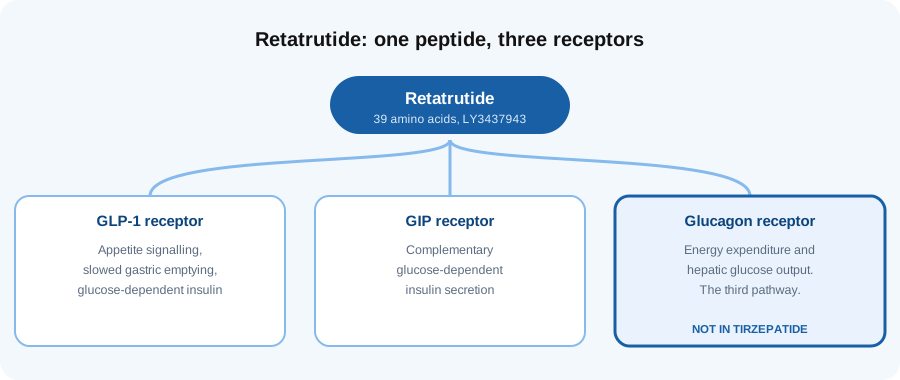
What makes it distinct is the triple agonist design. Where a GLP-1 only compound targets one receptor and Tirzepatide targets two, Retatrutide activates GLP-1, GIP and the glucagon receptor at the same time. The third receptor is studied for energy expenditure, which the other two do not directly address. Compare the dual agonist Tirzepatide , or read the full Retatrutide vs Tirzepatide guide .
Is Retatrutide available in Australia?
Yes, as a research compound. Retatrutide is not registered on the Australian Register of Therapeutic Goods, is not approved as a medicine here, and no pharmacy or chemist stocks it. Searches for when will retatrutide be available in australia are usually asking about approval, and there is no announced date for that.
What is available is research-grade Retatrutide supplied by research suppliers. PhaseOne ships it Australia-wide from Sydney with tracking, in six vial sizes, and every batch is independently HPLC tested. Anyone asking how to get retatrutide in Australia is choosing between research suppliers, so the practical question becomes which supplier publishes batch testing. Check our COA library , then view Retatrutide vial sizes and pricing .
How the triple receptor mechanism works
Each of the three receptors contributes something different, which is the whole point of the design.
GLP-1 receptor agonism
The best characterised of the three. GLP-1 receptor activation is studied for appetite signalling through the central nervous system, slowed gastric emptying, and glucose-dependent insulin secretion. This is the pathway every earlier generation of incretin compound targeted.
GIP receptor agonism
Studied for its complementary role in glucose-dependent insulin secretion. Targeting GIP alongside GLP-1 is the basis of dual agonists such as Tirzepatide, where the two pathways are examined together rather than separately.
Glucagon receptor agonism
The distinguishing component. Glucagon receptor activation is studied for increased energy expenditure and hepatic glucose output regulation. Adding it to GLP-1 and GIP agonism is the core rationale for the triple approach, because it addresses energy balance rather than repeating what the other two pathways already do.
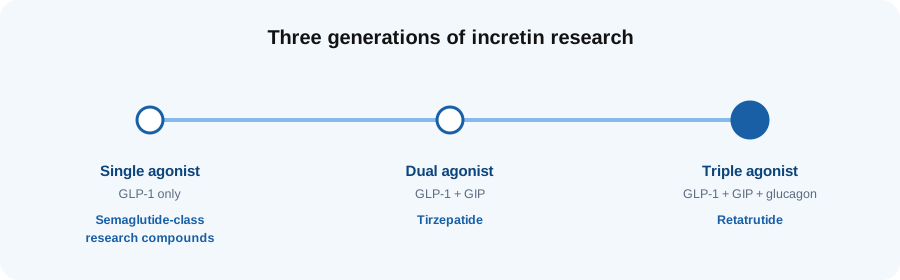
How the field got here: single, dual, triple
Incretin research has moved through three generations, each adding a mechanistically distinct pathway rather than simply increasing potency at the same receptor. GLP-1 only agonists built the appetite and glucose regulation base, dual GLP-1 and GIP agonists such as Tirzepatide added a second insulin secretion pathway, and triple agonists added glucagon. Researchers studying the category usually examine all three generations side by side to work out which receptor combination drives which outcome.
Retatrutide vs Tirzepatide
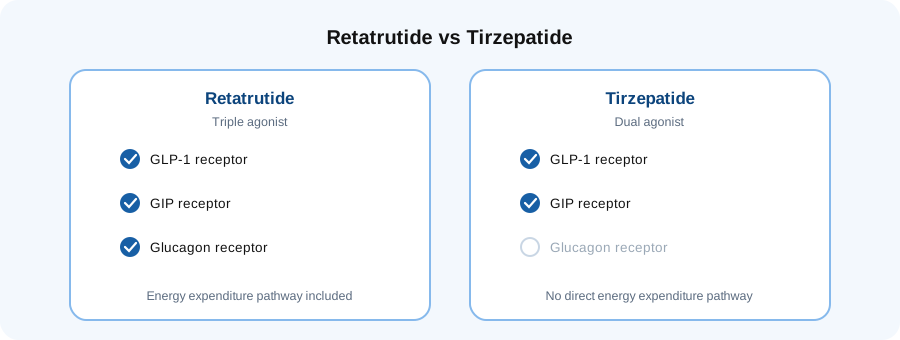
The difference is one receptor, and it is not a potency difference. Tirzepatide is a dual agonist at GLP-1 and GIP. Retatrutide adds the glucagon receptor, which brings an energy expenditure dimension that dual agonists do not target directly. Calling Retatrutide a stronger Tirzepatide is the most common mistake in this comparison.
PhaseOne supplies both. See Tirzepatide 10mg or the full Retatrutide vs Tirzepatide comparison .
Retatrutide vs MOTS-c: a different mechanism entirely
Both get called metabolic peptides, which is where the confusion starts. Retatrutide acts on cell-surface incretin and glucagon receptors, in the style of gut hormone signalling. MOTS-c is a mitochondrial-derived peptide studied for intracellular AMPK and stress response signalling. They are not alternatives to each other. The MOTS-c vs GLP-1 peptides guide sets the two mechanisms out in full.
Reconstitution volumes by vial size
Retatrutide arrives as a lyophilised powder and is reconstituted with bacteriostatic water . How much water you add sets the concentration, which sets every calculation after it. The table below shows common starting volumes for each vial size PhaseOne supplies.
| Vial size | Bac water added | Resulting concentration | Volume per 1mg |
|---|---|---|---|
| 5mg | 2ml | 2.5mg per ml | 0.4ml |
| 10mg | 2ml | 5mg per ml | 0.2ml |
| 15mg | 3ml | 5mg per ml | 0.2ml |
| 20mg | 4ml | 5mg per ml | 0.2ml |
| 30mg | 5ml | 6mg per ml | 0.17ml |
| 60mg | 6ml | 10mg per ml | 0.1ml |
Work out your own volumes with the peptide dosage calculator , and see the reconstitution guide for technique. You will need 1ml syringes and alcohol wipes: the Syringe Kit or the Starter Kit covers both, with bac water included in the starter kit.
After reconstitution, refrigerate promptly and do not freeze. Our storage guide covers the full set of stability variables.
Retatrutide vs semaglutide-class GLP-1 compounds
Single-receptor GLP-1 agonists are where this field started, and they remain the reference point for everything after. They act at one receptor, with appetite signalling and glucose-dependent insulin secretion the studied effects. Retatrutide keeps that pathway and adds two more. In comparative research designs the GLP-1 only compound is usually the baseline arm, because it isolates what the added receptors contribute. PhaseOne does not supply semaglutide-class compounds; the range covers Retatrutide, Tirzepatide and the wider GLP-1 research category .
Animal-model and pre-clinical research
Alongside the human trial data, Retatrutide has an animal-model literature designed to separate the individual receptor contributions. These studies matter because they can use comparator arms and tissue-level measurements that human trials cannot, which is how the energy expenditure question attached to the glucagon receptor gets examined directly rather than inferred from body weight outcomes.
Retatrutide in Australian research settings
For Australian researchers the practical constraints are supply and documentation rather than mechanism. Retatrutide cannot be obtained through pharmacy channels here, stock arriving from overseas can spend weeks in transit, and batch documentation varies widely between suppliers. PhaseOne holds Retatrutide in Sydney across all six vial sizes, dispatches with tracking, and publishes the Certificate of Analysis for every batch in the COA library , which removes both the wait and the guesswork.
Choosing a vial size
Vial size is a cost and convenience decision rather than a research one, since concentration is set at reconstitution. A 5mg vial suits a short protocol or a first evaluation of the compound. The 10mg and 15mg sizes are the common middle ground. The 30mg and 60mg vials bring the cost per milligram down for longer work, at the cost of holding a reconstituted vial for longer, which is where the storage guide becomes relevant. All six sizes are listed with current pricing on the Retatrutide product page .
What the clinical research shows, and what it does not
Retatrutide has a more developed human clinical research base than most research peptides, with published trial data on body weight, glucose regulation markers and metabolic outcomes. That is unusual for this category and worth knowing when comparing compounds.
What it does not establish is long-term data on all three receptor pathways together, since triple agonism is newer than single or dual approaches. Results should be read against the specific study population and protocol used rather than generalised. None of this changes the supply status: Retatrutide is sold here strictly as a laboratory research compound.
Isolating which receptor does what
Because all three receptors activate at once, a recurring methodological problem is working out which pathway drives an observed result. The usual approach is comparative: run Retatrutide alongside a GLP-1 only comparator and a GLP-1 and GIP dual agonist, then back out what the glucagon receptor contributed. It is the same logic that shaped the field's progression through the three generations.
How to check Retatrutide purity before you order
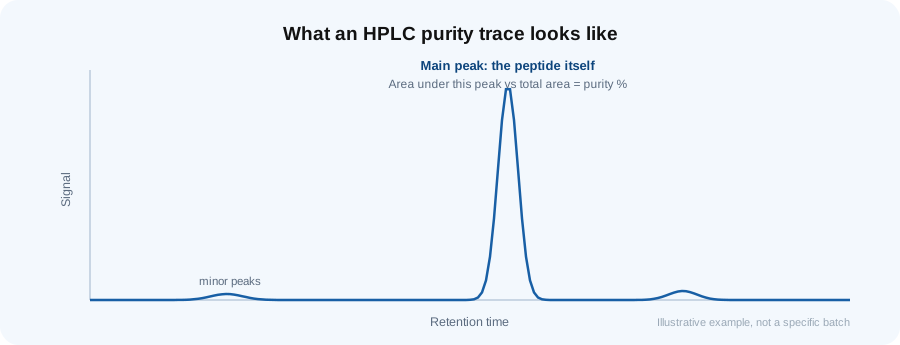
HPLC testing separates a sample into its components and measures each one. The main peak is the peptide; the area under it against the total area is the purity figure. Every PhaseOne batch is independently HPLC tested at 99% or higher, and the Certificate of Analysis for each batch is published in our public COA library so you can read the result before you order rather than after it arrives.
For how the testing works and what to look for on a certificate, see the HPLC testing guide and our research standards guide .
Buying Retatrutide in Australia
PhaseOne supplies Retatrutide in 5mg, 10mg, 15mg, 20mg, 30mg and 60mg vials, dispatched from Sydney with tracking, usually arriving in 1 to 5 business days. Smaller vials suit short protocols, while the 30mg and 60mg sizes bring the cost per milligram down for longer ones.
View all Retatrutide vial sizes and current pricing . Researchers commonly add bacteriostatic water and a syringe kit to the same order, or browse the whole research peptide range .
Common misconceptions
The first is that Retatrutide is a stronger Tirzepatide. It is not: the glucagon receptor is a different mechanism, not extra potency at the same two receptors. The second is grouping it with MOTS-c because both are called metabolic peptides, when one acts on cell-surface receptors and the other inside the mitochondria. The third is assuming availability follows research maturity. A developed clinical literature does not make a compound ARTG-registered, and Retatrutide is not.
Related research guides
For the dual agonist comparison, see the Retatrutide vs Tirzepatide guide . For the mitochondrial peptide often confused with it, see the MOTS-c hub . For the wider category, see the GLP-1 peptide guide and the metabolic peptide guide . For handling, see the reconstitution guide and bacteriostatic water guide .
Frequently Asked Questions
What is reta?
Reta is shorthand for Retatrutide, a synthetic 39 amino acid peptide that activates the GLP-1, GIP and glucagon receptors at the same time. It is supplied in Australia as a laboratory research compound only.
What does reta peptide mean, and is it the same as Retatrutide?
Yes. Reta, reta peptide, retatrutide and the development code LY3437943 all describe the same compound. The short form is just how it is written in research discussion and supplier listings.
Is Retatrutide available in Australia?
As a research compound, yes, through research suppliers such as PhaseOne, shipped Australia-wide. It is not registered on the ARTG, so it is not available as an approved medicine and no chemist stocks it.
When will Retatrutide be available in Australia?
There is no announced approval date. Retatrutide is not registered on the ARTG, and until that changes it is supplied here only as a research compound.
How do you get Retatrutide in Australia?
Order it from a research supplier. Choose the vial size on our Retatrutide page and the order ships from Sydney with tracking. Check the supplier publishes batch-specific HPLC results before ordering; ours are in the public COA library.
What reconstitution volumes are used for Retatrutide research?
It depends on the vial size and the concentration you want. As a starting point, 2ml of bacteriostatic water in a 10mg vial gives 5mg per ml. The table above lists common volumes for every size, and the peptide dosage calculator works out any combination.
How much does Retatrutide cost in Australia?
PhaseOne prices Retatrutide by vial size, from the 5mg vial up to 60mg, with the cost per milligram falling as the vial size increases. Current pricing for each size is shown on the product page.
What makes Retatrutide different from Tirzepatide?
The glucagon receptor. Tirzepatide is a dual agonist at GLP-1 and GIP; Retatrutide adds a third receptor studied for energy expenditure. It is a different mechanism rather than a stronger version of the same one.
Is Retatrutide the same research category as MOTS-c?
No. Both get called metabolic peptides, but Retatrutide works on cell-surface incretin and glucagon receptors while MOTS-c is a mitochondrial-derived peptide studied for intracellular AMPK signalling.
Why was glucagon receptor agonism added to GLP-1 and GIP?
It contributes an energy expenditure dimension that incretin receptor agonism alone does not provide, which makes the triple approach additive rather than simply more potent.
Is there clinical research on Retatrutide?
Yes, more than for most research peptides, including published human trial data on body weight and metabolic markers. Long-term data on the combined triple-receptor mechanism is still developing.
How should Retatrutide be reconstituted?
With bacteriostatic water added slowly down the inside wall of the vial, then swirled gently rather than shaken, and refrigerated once dissolved. The reconstitution guide covers the full technique.
How is Retatrutide purity verified?
Every batch is independently HPLC tested at 99% or higher purity, and the Certificate of Analysis for that batch is published in our public COA library so it can be checked before ordering.
What vial sizes does PhaseOne supply?
5mg, 10mg, 15mg, 20mg, 30mg and 60mg, all shipped Australia-wide with batch documentation published in the COA library.
How do researchers isolate the effect of the glucagon pathway?
By comparing Retatrutide against single agonist and dual agonist comparators, which lets the contribution of the added receptor be backed out rather than assumed.
Has incretin research always used triple agonists?
No. The field moved from GLP-1 only agonists, to dual GLP-1 and GIP agonists such as Tirzepatide, to triple agonists such as Retatrutide, each generation adding a distinct pathway.
Disclaimer
All products supplied by PhaseOne are intended strictly for laboratory research purposes only. Products are not intended for human consumption, therapeutic use, cosmetic use, veterinary use, or diagnostic applications.


